
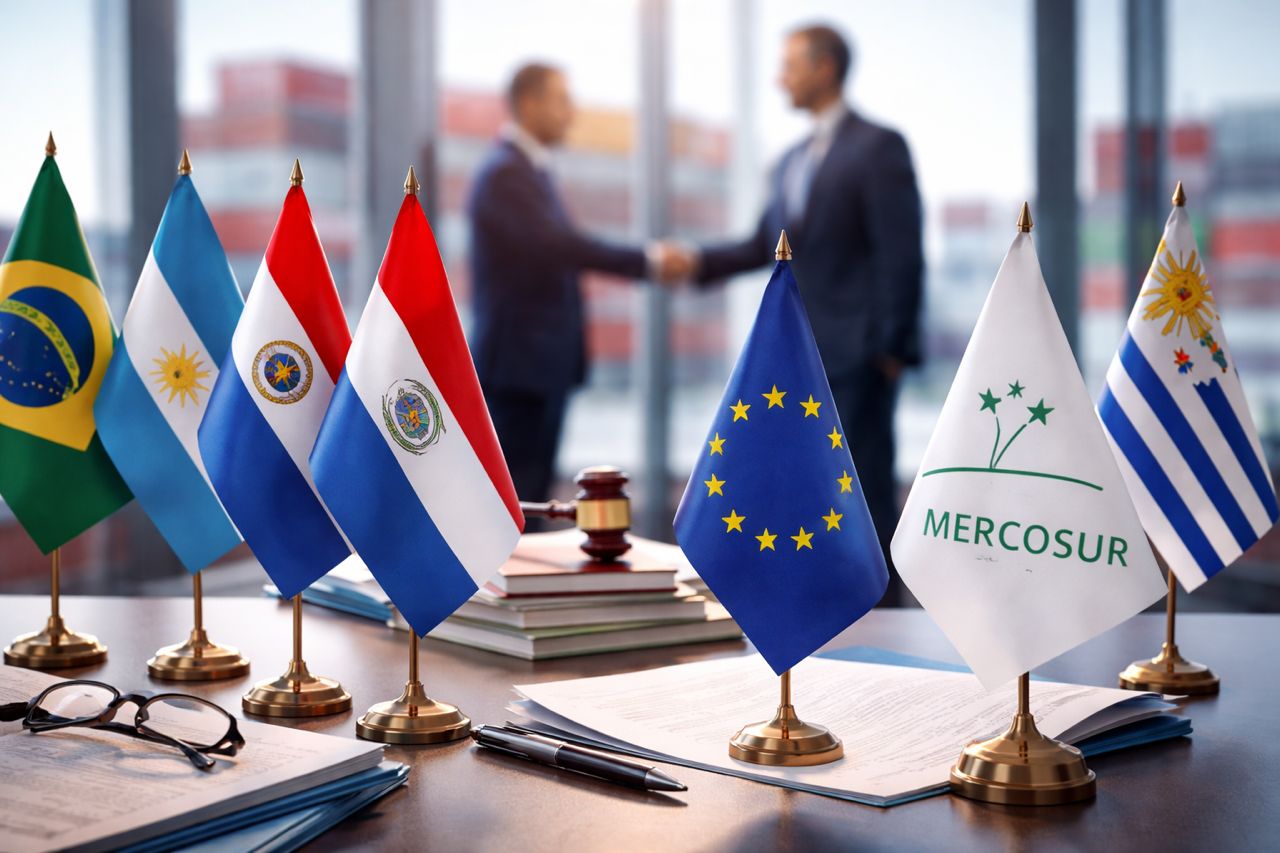
The European Union’s landmark free trade pact with South American countries is expected to take effect on a provisional basis as early as March, despite a court challenge that could delay full implementation for years, an EU diplomat told Reuters on Thursday.
The likelihood heightens the political and economic stakes surrounding the EU’s largest-ever trade agreement, even as opposition grows in some regions of the bloc.
Provisional application expected
“The EU-Mercosur agreement shall be applied provisionally once the first Mercosur country has ratified it,” the EU official said. “That will probably be Paraguay in March,” the official stated.
A provisional application would allow parts of the agreement to take effect before all national parliaments ratify it, a mechanism the EU has used in previous trade deals.
However, this path became more complicated on Wednesday when EU lawmakers referred the accord to the European Court of Justice, potentially delaying final ratification by up to two years.
This referral presents a significant procedural hurdle for an agreement that has already endured decades of negotiations and political opposition.
EU’s largest trade agreement
On Saturday, the EU inked an agreement with Brazil, Argentina, Paraguay, and Uruguay, bringing an end to 25 years of talks.
The agreement is the bloc’s greatest trade agreement to date, both economically and geographically.
Supporters of the deal claim that it is strategically important. They claim it will assist European businesses in offsetting losses due to US tariffs and diminish the EU’s reliance on China.
Many industries in Germany have expressed concern about potential delays, and Chancellor Friedrich Merz has actively supported the pact.
Merz expressed disappointment on Thursday over the European Parliament’s decision to bring the pact to the court.
“There is no alternative if we want to see higher growth in Europe,” he added.
Strong opposition from France
France has led the criticism of the agreement, with farmers concerned that an increase in imports of cheap cattle, sugar, and poultry will undercut domestic producers.
French farmers protested the accord in Paris earlier this year, with hundreds of tractors blocking roadways and surrounding sites like the Eiffel Tower.
Franck Sander, the chairman of France’s CGB sugar beet producers’ association, rejected the idea of the accord taking effect provisionally.
“That would constitute a denial of democracy. “Unacceptable,” he told Reuters.
Political threats and future steps
Applying the treaty provisionally while legal and parliamentary processes are ongoing could be politically risky, particularly given the potential for increased protests and backlash from member states opposed to the deal.
The European Commission has stated it will consult with EU member states and legislators before determining its next steps.
Meanwhile, EU leaders will meet later this Thursday in Brussels to discuss transatlantic relations following US President Donald Trump’s demands regarding Greenland—a separate issue that further complicates the political backdrop of the Mercosur debate.
For now, supporters view interim implementation as a way to maintain momentum after 25 years of negotiations, while critics see it as an overreach that undermines democratic oversight.
The post EU-Mercosur trade deal seen entering provisional force as court challenge looms appeared first on Invezz
