
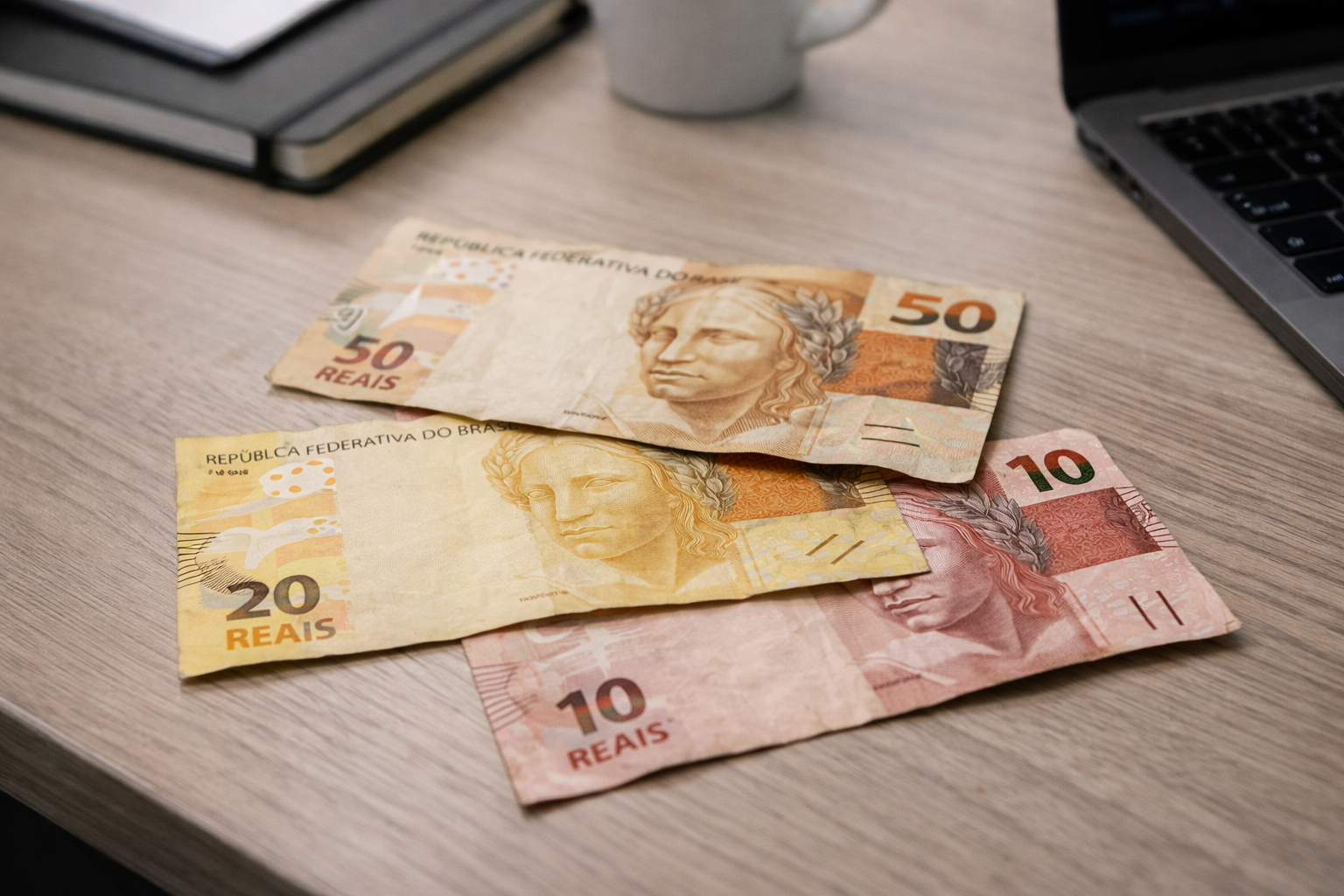
The Brazilian real strengthened on Monday, recovering from recent losses as global risk sentiment improved, with the currency appreciating to around 5.22 per US dollar.
The rebound followed US President Donald Trump’s decision to delay planned strikes on Iranian energy infrastructure, a move that eased geopolitical tensions and triggered a shift in currency markets.
The development prompted investors to unwind defensive positions, reducing pressure on emerging market currencies, including Brazil’s real.
The currency had previously weakened toward 5.3 per dollar during a period of heightened volatility.
That decline was driven by a mix of domestic and global factors, including record interventions by Brazil’s National Treasury to stabilize financial conditions and rising oil prices linked to geopolitical risks.
The real’s recovery underscores its sensitivity to shifts in global risk appetite, particularly when driven by developments in energy markets.
Oil prices and global sentiment drive moves
Commodity markets, especially crude oil, reacted immediately to the delay in potential Middle East strikes.
Prices, which had surged on fears of supply disruptions, began to retreat as the likelihood of escalation diminished.
For Brazil, a major oil exporter, this creates a nuanced impact.
While higher oil prices typically support the real through improved trade balances, sharp increases driven by geopolitical tensions often lead to risk aversion, pushing investors toward safe-haven assets such as the US dollar.
The recent pullback in oil prices helped ease inflation concerns and encouraged capital flows back into higher-yielding emerging markets like Brazil.
This shift in sentiment played a key role in the real’s rebound.
Domestic policy developments provide stability
On the domestic front, markets are also responding to political developments following Dario Durigan’s appointment as Brazil’s Finance Minister.
Durigan, who succeeded Fernando Haddad, has signaled a commitment to fiscal continuity, helping to reassure investors concerned about potential policy shifts.
Fiscal credibility remains central to currency stability, particularly in a volatile global environment.
Any perceived deviation from established fiscal discipline could renew pressure on the real.
For now, policy continuity has helped anchor expectations and support the currency.
Hawkish rate outlook adds support
Despite the recent recovery, Brazil’s monetary policy outlook has turned more hawkish.
Expectations for the benchmark Selic rate at the end of 2026 have risen to around 12.5%, reflecting persistent inflationary pressures.
Higher interest rate expectations tend to support the real by enhancing the attractiveness of Brazilian assets in carry trades.
However, elevated rates also point to underlying inflation risks and could weigh on domestic economic activity, potentially limiting sustained currency gains.
Equity markets rally alongside currency
Brazil’s benchmark Ibovespa index rose more than 3% on Monday, climbing above 181,000, mirroring the improvement in global risk sentiment.
The decline in oil prices and easing concerns about energy-driven inflation helped lower bond yields, supporting valuations in credit-sensitive sectors.
Major banks, including Bradesco, led the gains, rising more than 3.5%, while other large-cap companies such as Embraer and Rede D’Or also advanced.
In contrast, Petrobras declined 0.4%, reflecting the impact of lower oil prices.
The post Brazil real strengthens as risk sentiment improves after Trump decision appeared first on Invezz
