
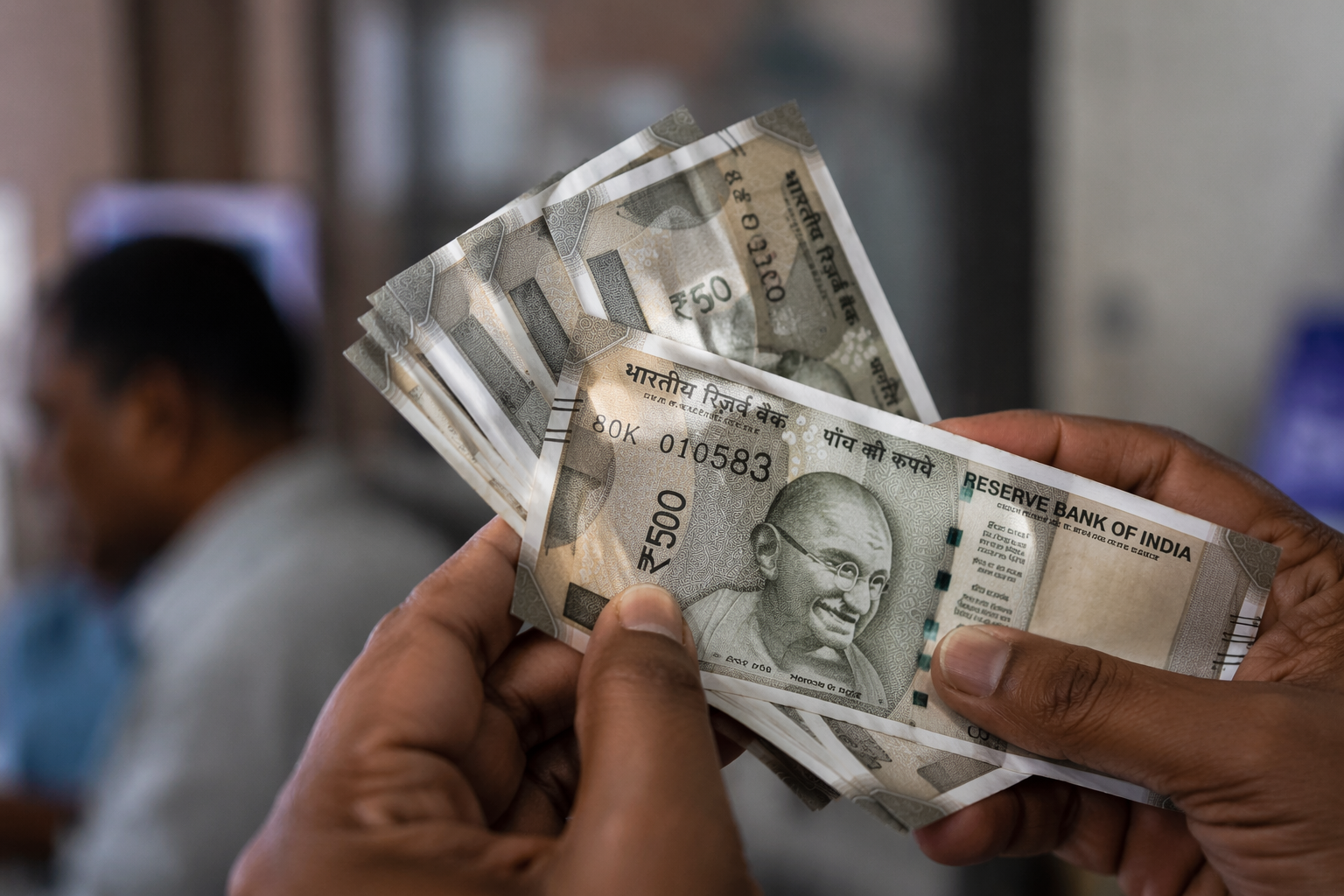
The Indian rupee edged higher in early trading on Monday, supported by mild dollar selling from foreign banks.
However, traders indicated that the upward move may remain limited due to elevated crude oil prices and continued importer hedging demand.
The rupee was quoted at 92.82 against the US dollar, marking a 0.1% gain from its previous close of 92.9250.
Market participants said that while foreign bank flows offered some support, underlying pressures persist.
Oil price surge caps currency gains
Brent crude oil futures climbed more than 5%, driven by rising uncertainty surrounding the Iran conflict.
As doubts emerged over the continuation of a ceasefire, which was expected to run until Tuesday.
Tensions escalated after the United States seized an Iranian cargo ship, prompting Tehran’s top military command to vow retaliation.
The developments pushed oil prices higher, creating a headwind for the rupee, given India’s reliance on crude imports.
Traders noted that higher oil prices typically increase demand for dollars from importers, which in turn limits gains in the domestic currency.
Asian currencies weaken; equities under pressure
Most Asian currencies traded lower on the day, with the Korean won leading losses, falling about 1%.
Indian equities also remained under pressure, reflecting broader risk-off sentiment in regional markets.
The ongoing uncertainty surrounding the Iran situation injected fresh volatility into financial markets.
RBI measures help stabilise sentiment
Despite external pressures, traders pointed out that recent regulatory measures by the Reserve Bank of India have helped stabilise the rupee.
These measures have targeted speculative trading activity while also easing dollar demand from major buyers such as state-run oil refiners.
Market participants said that these steps have reduced the incentive to bet aggressively against the rupee, contributing to relatively stable trading conditions.
Options market signals reduced bearish bias
Indicators from the options market also suggest a decline in bearish sentiment on the rupee.
The one-month 25 delta risk reversal narrowed to around 0.4 from 0.9 earlier this month.
This shift reflects a reduced appetite for options that bet on rupee depreciation compared to those positioning for appreciation.
Traders said the change highlights a more balanced outlook on the currency in the near term.
Markets remain sensitive to Middle East developments
“Markets remain sensitive to Middle East developments, with focus on whether de-escalation signals are credible or merely episodic noise driving volatility,” MUFG said in a note, as cited in a Reuters report.
Meanwhile, geopolitical tensions showed no immediate signs of easing.
Iran rejected fresh peace talks with the United States, according to its state news agency.
The rejection came hours after former US President Donald Trump said he was sending envoys for talks in Pakistan.
Trump also reiterated threats to target Iranian infrastructure, including power plants and bridges, if Tehran does not accept US terms.
Traders said that such developments are likely to keep currency markets volatile in the near term, with the rupee’s trajectory closely tied to oil prices and geopolitical headlines.
The post Rupee ticks up, but elevated oil prices restrict gains appeared first on Invezz
