
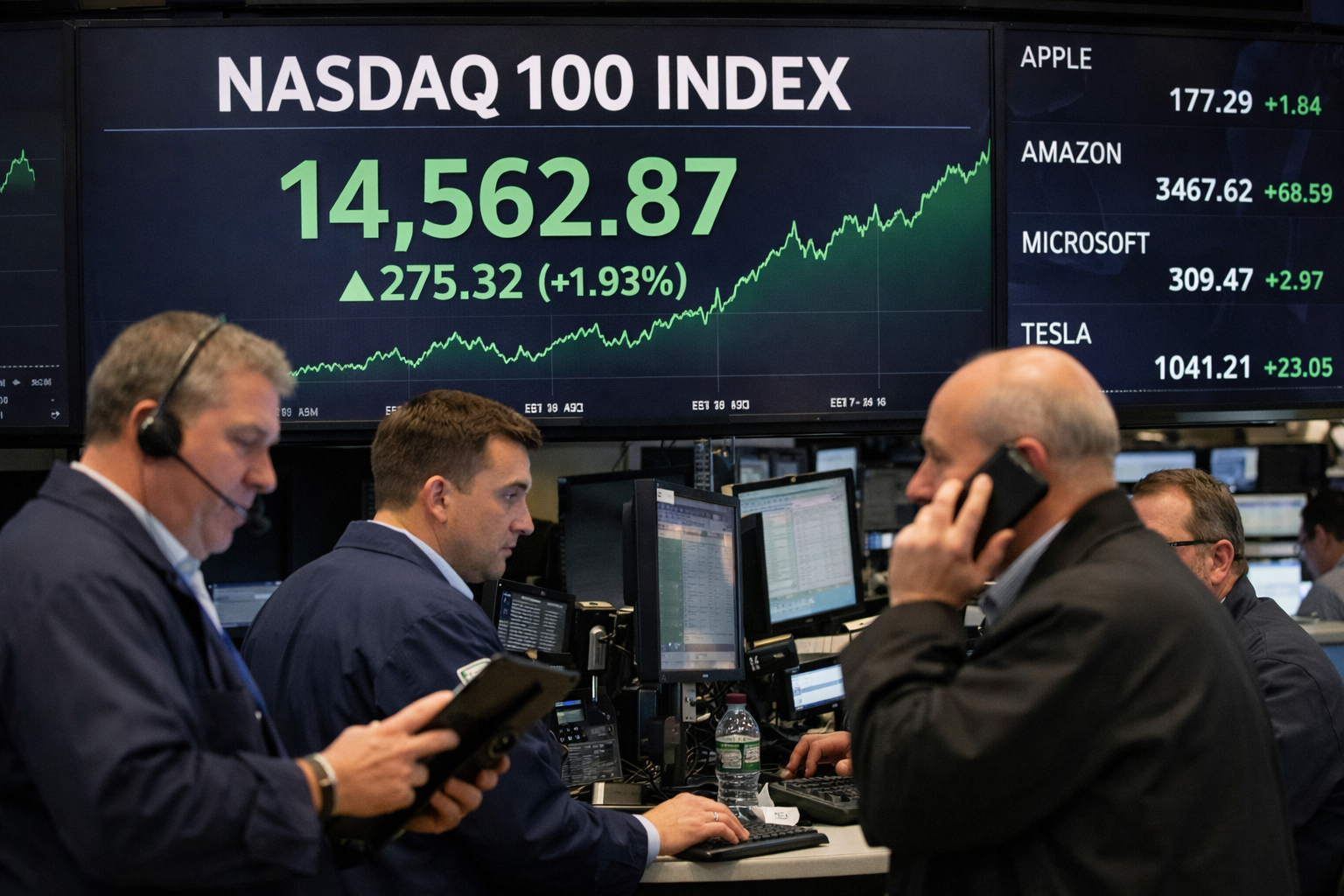
The Nasdaq 100 Index and its ETFs, such as QQQ and QQQM, continue to decline and are nearing a correction after dropping 9.2% from their peak earlier this year.
This retreat may persist as the effects of the ongoing war ripple through the markets and outflows intensify.
Nasdaq 100 Index faces major risks as QQQ ETF outflows jump
Futures tied to the Nasdaq 100 Index continued falling today, March 16, as concerns about Iran continued and as investors continued to dump their QQQ holdings.
The futures dropped by 100 points, continuing a downward trend that started in January this year when it peaked at a record high of $26,130.
The main concern is that there are signs that the ongoing Iran war will continue for longer than expected, with the US gathering armed forces to the Middle East.
The US has sent a 15-point proposal to Iran, with the country’s officials saying that most were non-starters.
For example, the proposals call for Iran to limit its ballistic missile program and use it only for defense.
The US also wants Iran to dismantle its nuclear program, cease supporting proxy groups, and guarantee passage of the Strait of Hormuz.
Iran, on the other hand, has sent five demands, including compensation, guarantees that hostilities will not resume, and sovereignty of the Strait of Hormuz.
It is also pressing the US to shut down its bases in the region.
Therefore, there is a possibility that the war will take months or even years.
For one, in a statement after attending a military briefing, Representative Nancy Mace said that she would not support deployments to the region.
Also, the Pentagon has requested $200 billion for the war, meaning that officials expect it to last for longer.
A long war means that crude oil and other energy prices will continue rising in the near term.
Indeed, data shows that Brent and the West Texas Intermediate (WTI) jumped to $100 and $93, respectively. Natural gas and fertilizer prices have also continued rising.
As a result, consumer and producer inflation will likely remain at an elevated level in the coming months, which will lead to higher interest rates.
Data shows that US bond yields have continued rising, with the 10-year and 2-year yields jumped to 4.37% and 3.93%, respectively.
Meanwhile, data shows that the Invesco QQQ ETF has continued shedding assets this year. It has had over $10.2 billion in outflows this year.
Also, the Invesco NASDAQ 100 ETF (QQQM) has added $2.5 billion this year.
QQQ ETF has shed over $10.2 billion | Source: ETF
Nasdaq 100 Index technical analysis
Nasdaq 100 Index chart | Source: TradingView
The daily timeframe chart shows that the Nasdaq 100 Index has continued falling in the past few months, moving from a high of $26,120 to the current $24,160.
A closer look shows that the index is hovering near the 23.6% Fibonacci Retracement level.
It has also formed an inverted cup-and-handle pattern, a common bearish continuation sign in technical analysis.
The index has also dropped below the 50-day Exponential Moving Average (EMA) and the Supertrend indicator.
Therefore, the most likely Nasdaq 100 Index forecast is bearish, with the next next key target being at $22,515, the 38.2% Fibonacci Retracement level.
This target price is about 6.52% below the current level.
The post Nasdaq 100 nears correction as risks rise, QQQ ETF outflows jump appeared first on Invezz
