
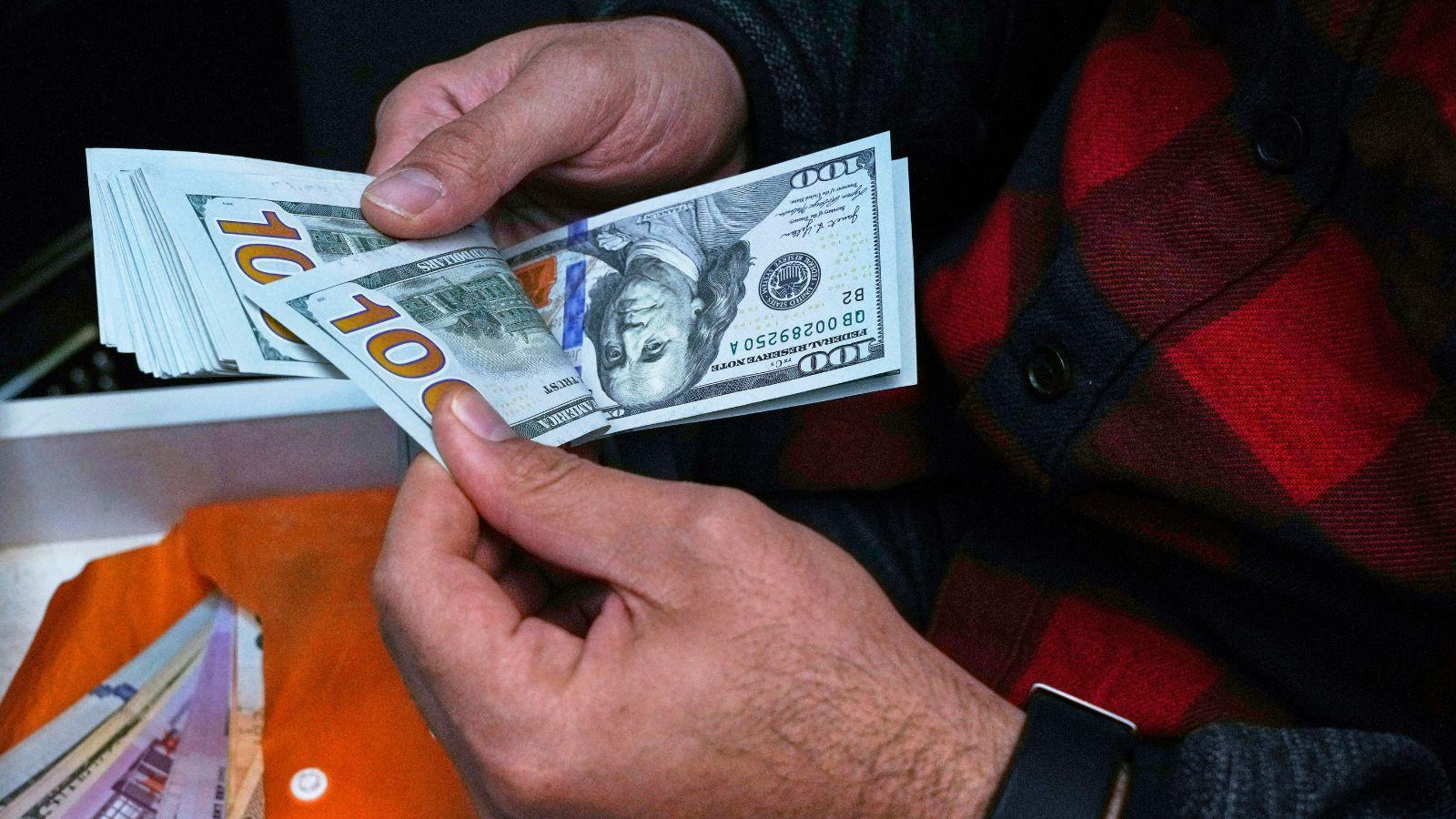
The dollar traded firmer against major currencies during Friday’s Asian session after renewed hostilities between the United States and Iran unsettled financial markets and boosted demand for safe-haven assets.
The US and Iran exchanged fire and sharp remarks again on Thursday, increasing pressure on a fragile month-long ceasefire.
The tensions resurfaced as Iran reviewed Washington’s proposal aimed at ending the conflict.
The renewed geopolitical uncertainty pushed oil prices higher, with US crude futures climbing as much as 3% in early trading.
The move added to the risk-off mood across currency markets.
The dollar index, which measures the greenback against a basket of major peers, edged higher to 98.235.
The gains helped the dollar recover further from the more than two-month low touched earlier in the week when optimism over a potential peace agreement had weighed on the currency.
Despite the latest rebound, the dollar remained on track to end the week largely unchanged.
Geopolitical risks support the dollar
Chris Weston, head of research at Pepperstone, said traders were reassessing expectations surrounding the conflict and shipping activity through the Strait of Hormuz.
“The path towards a lasting agreement is anything but linear,” Weston wrote.
“Traders have had to rethink the assumptions on the trajectory of the conflict and the normalization of vessel flows through Hormuz that had been made over the last couple of sessions.”
The rise in oil prices and renewed uncertainty encouraged investors to move cautiously, supporting the US dollar for a second straight session.
Markets were also preparing for the release of the US non-farm payrolls report later on Friday.
Weston said the labour market data could influence currency volatility if the figures significantly diverge from expectations.
He noted that “it may take an outlier number, particularly a sufficiently weak one, to really move the dial on dollar volatility.”
Sterling heads for weekly loss
Sterling traded at $1.3555 and was set for its first weekly decline since March.
Investors remained cautious ahead of local election results in Britain, which could increase political pressure on Prime Minister Keir Starmer.
The euro was little changed at $1.1727 and appeared set to end the week marginally stronger.
Meanwhile, the Australian dollar traded at $0.72059, while the New Zealand dollar stood at $0.59365.
Both currencies remained on course for weekly gains after improved risk sentiment earlier in the week supported commodity-linked currencies.
Yen remains under focus
Traders also kept close watch on the Japanese yen following recent market interventions and repeated verbal warnings from Japanese officials aimed at limiting sharp declines in the currency.
The yen was broadly steady at 156.995 per dollar in early Asian trading and was on track to end the week little changed.
Japan’s top currency diplomat said on Thursday that Tokyo faced no restrictions on how often it could intervene in currency markets.
The official also said Japan remained in daily contact with US authorities regarding currency developments.
The comments reinforced Tokyo’s determination to support the struggling yen.
The post Dollar strengthens after US-Iran clashes reignite market uncertainty appeared first on Invezz
